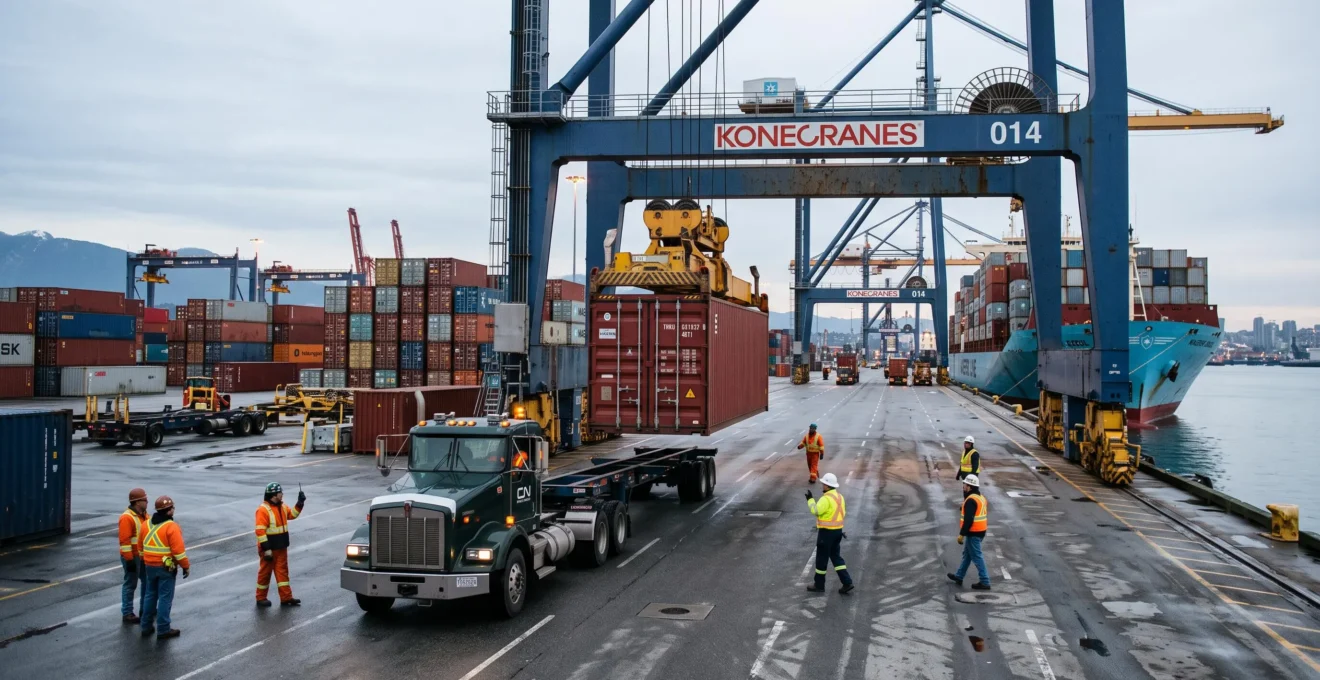
Free trade agreements allow Canadian businesses to access certain foreign markets more easily by reducing customs duties, clarifying trade rules, and facilitating exchanges with partner countries. They can make Canadian products more competitive, support export diversification, and improve the predictability of international operations.
However, these benefits are not automatic. A company must verify that its goods comply with the applicable agreement’s rules of origin, prepare the required documentation, and satisfy the importing country’s regulatory requirements. A product manufactured in Canada does not, therefore, systematically benefit from a preferential tariff.
For entrepreneurs, understanding these mechanisms helps in better selecting a market, calculating export costs, and preventing customs errors. The value of a trade agreement depends as much on the opportunities it opens as on the company’s ability to fulfill its conditions.
Canada’s Trade Agreements: Key Takeaways
- Free trade agreements can reduce customs duties and facilitate Canadian products’ access to foreign markets.
- Tariff preferences depend notably on customs classification, rules of origin, and required supporting documentation.
- Market selection must also factor in logistical costs, local standards, and commercial risks.
- 26: Why is international trade a cornerstone of Canadian prosperity?
- 20.4: What trade shocks can rapidly affect the Canadian economy?
- 27.1: Why can a free trade agreement make certain Canadian products more competitive?
- 27.2: How do you determine if Canadian goods benefit from a free trade agreement?
- 27.3: North American vs. European market: what are the differences for a Canadian exporter?
- How does a Canadian business prepare to export its products to a foreign market?
- 27.4: What errors can cause the loss of a tariff preference provided by a trade agreement?
- 27.5: When should you analyze free trade agreements before choosing a new market?
26: Why is international trade a cornerstone of Canadian prosperity?
International trade contributes to Canadian prosperity by enabling businesses to sell beyond the domestic market, access foreign resources and components, and participate in global production chains. Exports support economic activity and jobs, while imports expand supply options for businesses and consumers.
Canada possesses a vast territory and abundant natural resources, but its domestic market remains relatively limited compared to major international markets. Access to foreign buyers notably allows raw material producers, manufacturers, and service companies to grow their operations beyond Canadian demand.
Trade also plays a key role in supply chains. A manufacturing company can import components, process them in Canada, and sell the finished product to a foreign customer. Smooth trade flows thus influence production costs, delivery timelines, and competitiveness.
A distinction must nevertheless be made between economy-wide benefits and those of an individual business. A rise in national exports does not guarantee additional sales for every SME. The ability to find customers, comply with foreign standards, and offer a competitive price remains decisive.
Free trade agreements provide a framework to facilitate these operations. They can reduce certain tariff barriers, establish more predictable rules, and include dispute settlement mechanisms. Depending on their scope, they also cover services, investments, or public procurement.
This framework eliminates neither competition nor commercial risks. Rather, it allows eligible businesses to conduct international operations under more clearly defined conditions.
This openness nevertheless creates exposure to the decisions of trading partners. A tariff modification or supply chain disruption can quickly impact Canadian businesses.
20.4: What trade shocks can rapidly affect the Canadian economy?
The Canadian economy can be rapidly affected by increased customs duties, geopolitical tensions, trade restrictions, or international logistical disruptions. These shocks alter business costs and opportunities, sometimes before companies can adjust their prices, suppliers, or export markets.
The concentration of a significant share of Canadian trade toward the United States heightens this vulnerability. When a major trading partner alters its market access conditions, many businesses can be affected simultaneously—particularly those whose supply chains cross the border regularly.
Effects can manifest at various levels: higher prices paid by the importer, reduced orders, increased component costs, delivery delays, or the need to amend commercial contracts.
-29.4 billion Canadian dollars
Change in Canadian domestic merchandise exports to the United States between 2024 and 2025, in value. Over the same period, domestic exports to other destinations grew by 27.6 billion dollars. These figures do not allow developments to be attributed exclusively to trade agreements.
Statistics Canada, Statistics Canada’s analysis of the Canadian economy in spring 2026, published April 22, 2026.
These developments illustrate the importance of geographic diversification. A company with outlets in multiple regions can reduce its dependence on a specific market without eliminating the inherent risks of other destinations.
Free trade agreements can facilitate this diversification by opening additional commercial opportunities. They do not, however, guarantee absolute protection: safeguard measures, trade defense instruments, or specific restrictions can modify access conditions to certain markets, in accordance with applicable rules.
A business must therefore monitor its partners’ trade decisions and regularly verify the actual duties owed. The tariff rate outlined in an agreement and the cost actually applicable to a shipment do not necessarily coincide in all circumstances.
Diversification represents one possible response to these risks, but it becomes valuable only if Canadian products can reach new buyers at a competitive cost.
27.1: Why can a free trade agreement make certain Canadian products more competitive?
A free trade agreement can improve a Canadian product’s competitiveness by reducing customs duties applied in the importing country. This reduction can lower entry costs into the market, facilitate a more attractive price offer, or protect commercial margins. The advantage depends, however, on the product, its origin, and the terms of the agreement.
Customs duties represent a cost that can influence the final price of imported goods. When an agreement provides for their reduction or elimination, the importer can realize savings, subject to meeting the requirements for preferential treatment.
Hypothetical Example: The Effect of a Preferential Tariff
A Canadian SME wishes to sell goods to a foreign distributor. If a normally applicable customs duty is eliminated under a trade agreement and the goods satisfy eligibility conditions, the importer bears a lower customs cost.
Depending on the contract and commercial negotiation, these savings can help reduce the selling price, improve the margin, or make the Canadian offer more competitive. The outcome also depends on other costs incurred.
The benefit is particularly significant when buyers compare similar products and pay close attention to prices. However, a tariff advantage does not automatically translate into a net commercial advantage.
Agreements can also improve non-tariff aspects of trade, depending on their provisions: public procurement access conditions, regulatory cooperation, intellectual property protection, or trade facilitation procedures.
These benefits nevertheless have limits. Shipping costs, currency fluctuations, technical requirements, and distribution costs can offset part of the tariff gain. Furthermore, competitors enjoying the same preferential treatment may retain similar terms.
Finally, a product made in Canada using foreign components does not automatically qualify as originating under an agreement. Preferential rules of origin determine whether its manufacturing satisfies the conditions required to obtain the reduced tariff.
The ability to sell at a lower cost is therefore valuable only if the business can demonstrate that its product qualifies for preferential treatment.
27.2: How do you determine if Canadian goods benefit from a free trade agreement?
To determine if Canadian goods qualify under a free trade agreement, a business must identify the applicable agreement, determine its customs classification under the Harmonized System, check the corresponding rule of origin, and prepare the required proof of origin. The geographic origin stated on a label or the place of shipment is not sufficient to establish eligibility.
The first check concerns the destination country. An export to the United States or Mexico may fall under the Canada–United States–Mexico Agreement (CUSMA), whereas an export to the European Union may fall under the Comprehensive Economic and Trade Agreement (CETA). NAFTA was replaced by CUSMA in 2020.
Next, you must find the Harmonized System (HS) code corresponding to the product. The first six digits are internationally harmonized, but additional tariff subdivisions may vary by country.
This classification identifies the specific rule of origin and applicable duties. Goods wholly obtained in Canada may satisfy certain origin criteria, whereas a product incorporating imported components often requires a more detailed analysis of its manufacturing process.
Under CETA, preferential origin can notably result from the product being wholly obtained, using exclusively originating materials, or undergoing sufficient production. Cumulation mechanisms between Canada and the European Union exist under the conditions set out in the official protocol on rules of origin and origin procedures.
Processing carried out in Canada is therefore not automatically sufficient. A company must examine the specific rule for its product, especially when it contains materials from third countries.
Certification is a distinct step. Under CUSMA, the exporter, producer, or importer can complete the origin certification. No single mandatory form is required, but the minimum required information must be present. Procedures differ under CETA, which provides for an origin declaration made by the exporter on an invoice or another commercial document.
Transit through a third country or re-exportation of imported goods may also require specific checks. To minimize errors, businesses can consult Canada Tariff Finder, Trade Commissioner Service resources, and the relevant customs authorities of the target market.
When classification or origin remains uncertain, obtaining clarification from the relevant authority prior to shipment can prevent subsequent disputes.
27.3: North American vs. European market: what are the differences for a Canadian exporter?
The North American market offers Canadian exporters geographic proximity and strong supply chain integration, particularly under CUSMA. The European Union market, accessible under CETA, allows for outlet diversification but often involves different logistical and regulatory constraints. The best choice depends on the product and the company.
CUSMA governs preferential trade among Canada, the United States, and Mexico. It operates within commercial relationships where components and finished products frequently move across multiple manufacturing sites.
CETA covers trade between Canada and the European Union, which comprises 27 member states. It eliminates nearly all customs duties on covered goods according to applicable provisions, but does not exempt exporters from meeting European regulatory requirements.
To compare the two zones, a business must examine several operational dimensions.
| Criterion | North America — CUSMA | European Union — CETA |
|---|---|---|
| Commercial Organization | Highly integrated supply chains across the three countries. | Access to multiple national markets within a single economic block. |
| Transport | Overland transport options, depending on destination. | Transatlantic transport and adapted logistical setup. |
| Compliance | Product-specific U.S. or Mexican requirements. | European rules and, depending on the product, additional national obligations. |
| Preferential Origin | Rules and certification provided under CUSMA. | Rules and origin declaration provided under CETA. |
| Risks | Exposure to North American trade tensions. | Compliance costs, distance, and differences across target markets. |
In Europe, an exporter may specifically need to adapt labels, demonstrate technical product compliance, or partner with a distributor familiar with local commercial channels. These obligations vary by sector and target country.
In North America, proximity does not guarantee the absence of disputes. Trade measures and sector-specific requirements must be checked separately from preferences granted by CUSMA.
Origin procedures deserve careful attention. According to CBSA guidance on origin certification under CUSMA, a valid certification must contain the required minimum data elements and be supported by records substantiating origin.
The exact same goods may meet the rule of origin under one agreement while failing under another. A company must therefore analyze its production chain for each destination, rather than assuming an existing certification is universally valid.
Once the market is selected, the priority becomes organizing the entire commercial operation to turn preferential conditions into usable advantages.
How does a Canadian business prepare to export its products to a foreign market?
A Canadian business prepares for export by researching foreign demand, verifying customs and regulatory requirements, and then arranging sales, transport, and necessary documentation. It must factor in the free trade agreement before setting its final price, as origin conditions, applicable duties, and contractual responsibilities directly impact operation profitability.
Preparation begins with market research: target clientele, competition, buying habits, distribution networks, and entry barriers. This analysis helps determine whether potential demand justifies commercial and logistical expenses.
The business then verifies the tariff classification of its goods, local standards, labeling requirements, and any necessary permits. Target market rules must be examined even when an agreement eliminates customs duties.
Logistical preparation covers carrier selection, packaging, optional insurance, and the division of responsibilities between seller and buyer. Incoterms rules can be used to specify contractual delivery commitments.
The price offered to the client should be established by comparing a standard tariff scenario against a preferential one. This comparison determines whether customs savings justify compliance fees and additional market-related costs.
The distribution model also affects organization. Direct sales, using a commercial agent, or collaborating with an importer-distributor do not necessarily share the same administrative obligations. Everyone’s responsibilities must be clearly defined.
Canadian Export Preparation Checklist
- Validate target market: create a summary sheet specifying clientele, competitors, and identified entry constraints.
- Classify goods: prepare a product sheet listing the chosen HS code and features justifying that classification.
- Verify trade agreement: assemble a file containing the applicable rule of origin and documentation proving product eligibility.
- Calculate costs: prepare two landed cost simulations, with and without preferential tariff treatment.
- Check formalities: finalize a verified document list with relevant parties prior to shipment.
Documentation must be organized and retained, including manufacturing details, supplier proofs, origin declarations, and relevant commercial records. Guidance from the Trade Commissioner Service, a customs specialist, or an export advisor can facilitate complex operations.
This structure remains essential beyond initial sales, as changes in suppliers, processes, or documentation can undermine previously established eligibility.
27.4: What errors can cause the loss of a tariff preference provided by a trade agreement?
A business can lose a tariff preference when using an incorrect customs classification, applying an inappropriate rule of origin, or submitting an invalid certification. Changes in suppliers or production can also render goods ineligible. Depending on applicable rules, these errors can lead to denial of preferential tariffs, additional duties, or penalties.
The first challenge relates to tariff classification. If the product is categorized under the wrong Harmonized System code, the business may apply a rule of origin or customs treatment that does not apply to it.
Another mistake is confusing manufacturing in Canada with Canadian preferential origin. Local processing of imported materials is not always sufficient to satisfy an agreement’s criteria. Origin depends on the specific rule applicable to the goods and the actual production conditions.
Documentation is another source of risk. Under CETA, the absence of a valid origin declaration can prevent preferential tariff application. The Trade Commissioner Service guide on using CETA outlines classification, certification, and record-keeping steps required.
Indirect errors can be more difficult to detect. A company might substitute a component with material from another country, outsource a manufacturing stage to a foreign subcontractor, or modify the product’s composition without re-evaluating its origin.
It is also essential to distinguish an isolated error from a systemic issue. An incorrect certification on a single shipment affects a specific operation, whereas a flawed verification method can jeopardize multiple consecutive deliveries.
Preventive controls can rely on validating new suppliers, periodically reviewing origin records, and verifying classification whenever a product evolves. Regulatory changes and the conditions of the applicable agreement should also be monitored.
During a customs audit, a business must be able to present evidence consistent with the declarations made. Depending on applicable law, an adverse decision may be subject to correction, review, or appeal procedures. These options should be verified with the competent authority.
Trade compliance must therefore be monitored over time. This requirement becomes particularly important when a business targets multiple new markets subject to different agreements.
Key Takeaways Before Choosing a New Market
- A tariff preference is valuable only if the goods are eligible and the savings exceed the costs required to access the market.
- Dependence on a single trading partner can increase exposure to tariff tensions and supply disruptions.
- Analyzing trade agreements should precede major commercial commitments, then be updated whenever rules or market conditions evolve.
27.5: When should you analyze free trade agreements before choosing a new market?
A Canadian business should analyze free trade agreements as early as the pre-selection stage for its export markets, before negotiating prices or committing significant commercial expenses. This check makes it possible to evaluate tariff preferences, rules of origin, potential exclusions, and regulatory risks, then compare destinations based on their actual potential rather than theoretical accessibility alone.
The existence of a trade agreement is a selection criterion, but it does not replace market research. A destination may offer a favorable customs tariff while presenting high transportation costs, complex technical requirements, or insufficient demand for the product concerned.
A preliminary analysis should specifically examine:
- Tariff treatment: duties applicable to the product, potential phased reductions, quotas, or relevant exclusions.
- Origin conditions: compatibility of the production chain with the agreement’s criteria.
- Local obligations: technical standards, labeling, authorizations, and marketing conditions.
- Access costs: freight, insurance, distribution, compliance, and customs formalities.
- Commercial stability: geopolitical tensions, restrictive measures, and reliance on specific partners.
This approach allows multiple markets to be compared on a consistent basis. It may also reveal that a country without a significant tariff advantage remains attractive due to strong demand, distribution networks, or favorable logistics costs.
Analysis must not stop at the first contract. Certain agreements include implementation stages, review provisions, or mechanisms capable of altering commercial conditions. Furthermore, ongoing negotiations may change a market’s future appeal, without guaranteeing the entry into force of a new agreement.
Regular monitoring helps track duties, rules of origin, trade measures, and regulatory requirements. It should distinguish agreements currently in force from proposals still under discussion.
For an SME, the most practical approach consists of comparing a limited number of realistic destinations, taking into account both commercial prospects and the resources required to ensure compliance.
The next step involves selecting priority markets, officially verifying the treatment applicable to the relevant products, and establishing an export budget that incorporates various tariff scenarios. This preparation helps guide decisions based on concrete criteria, without assuming that a free trade agreement alone guarantees commercial success.
Is a product made in Canada automatically exempt from customs duties?
No. To obtain a preferential tariff, a product must comply with the rules of origin of the applicable agreement and satisfy documentation requirements. Being manufactured in Canada does not automatically guarantee preferential origin, particularly when the product contains imported components.
Can a small Canadian business benefit from free trade agreements?
Yes. Free trade agreements are not reserved exclusively for large corporations. An SME can request intended benefits when it meets applicable conditions. It must nonetheless evaluate administrative overhead, compliance obligations, and overall export profitability.
Who must prepare the origin certification for exported goods?
This depends on the trade agreement. Under CUSMA, certification can be completed by the exporter, producer, or importer. Under CETA, the origin declaration is completed by the exporter according to specified procedures. Required details and supporting documents must be verified for each agreement.
Can you export to Europe without using CETA preferences?
Yes, provided applicable import regulations are followed. However, if the importer does not or cannot claim CETA preferential tariff treatment, standard duty rates normally applicable to the goods may be assessed. It is therefore useful to evaluate eligibility before setting commercial prices.
Does a free trade agreement protect against all customs duty increases?
No. An agreement governs trade relationships, but certain safeguard measures, trade defense instruments, or restrictions may apply in accordance with relevant rules. Exporters should verify the actual tariff conditions in effect for their goods, even when a preferential agreement exists.